History
"The more you know about the past, the better prepared you are for the future."
Theodore Roosevelt
History helps us to understand the world we live in. Every debate about democracy, migration, inequality, war, medicine, rights and identity has roots in the past. By studying History at Passmores Academy, students learn how societies have changed, why people make the decisions they do and how the actions of individuals can shape the lives of millions.
We believe that History is much more than learning facts and dates. It is about asking questions, weighing evidence, challenging interpretations and forming reasoned judgements. Through the study of the past, students develop curiosity about the world around them and gain the confidence to engage with some of the most important issues facing society today.
At Passmores Academy, we aim to develop students who are:
- Curious about the past and its impact on the present.
- Confident in questioning evidence and challenging assumptions.
- Able to construct well-supported arguments and judgements.
- Aware of the diversity of human experiences across time and place.
- Prepared to participate thoughtfully in modern democratic society.
- Inspired by History and motivated to continue exploring it beyond the classroom.
Our curriculum is designed to help students understand not only what happened, but why it happened, why it mattered, and how historians continue to debate its significance today.
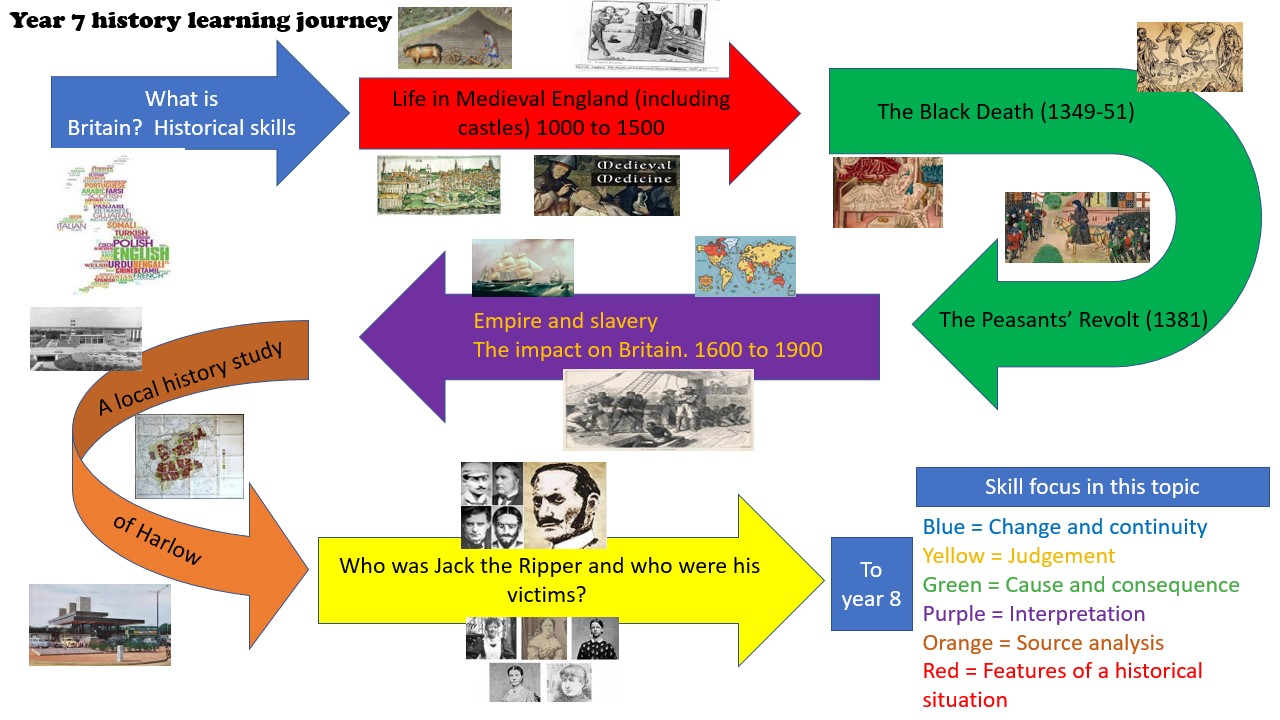
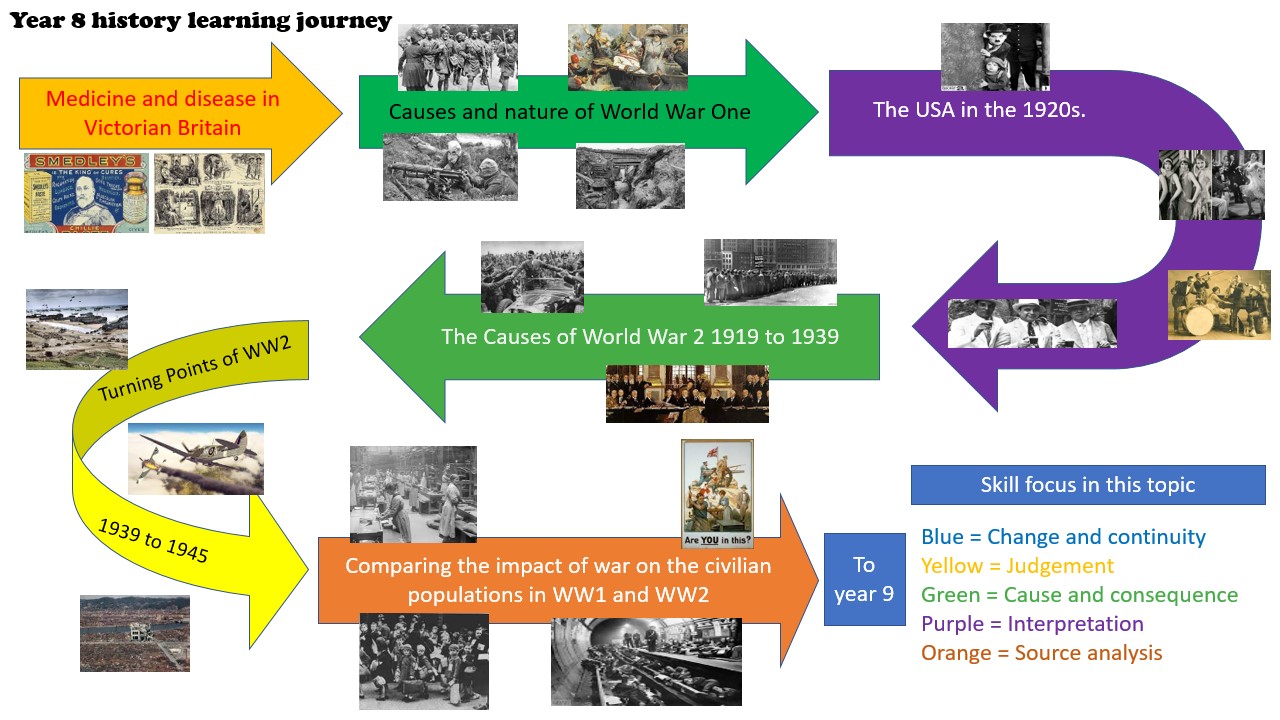
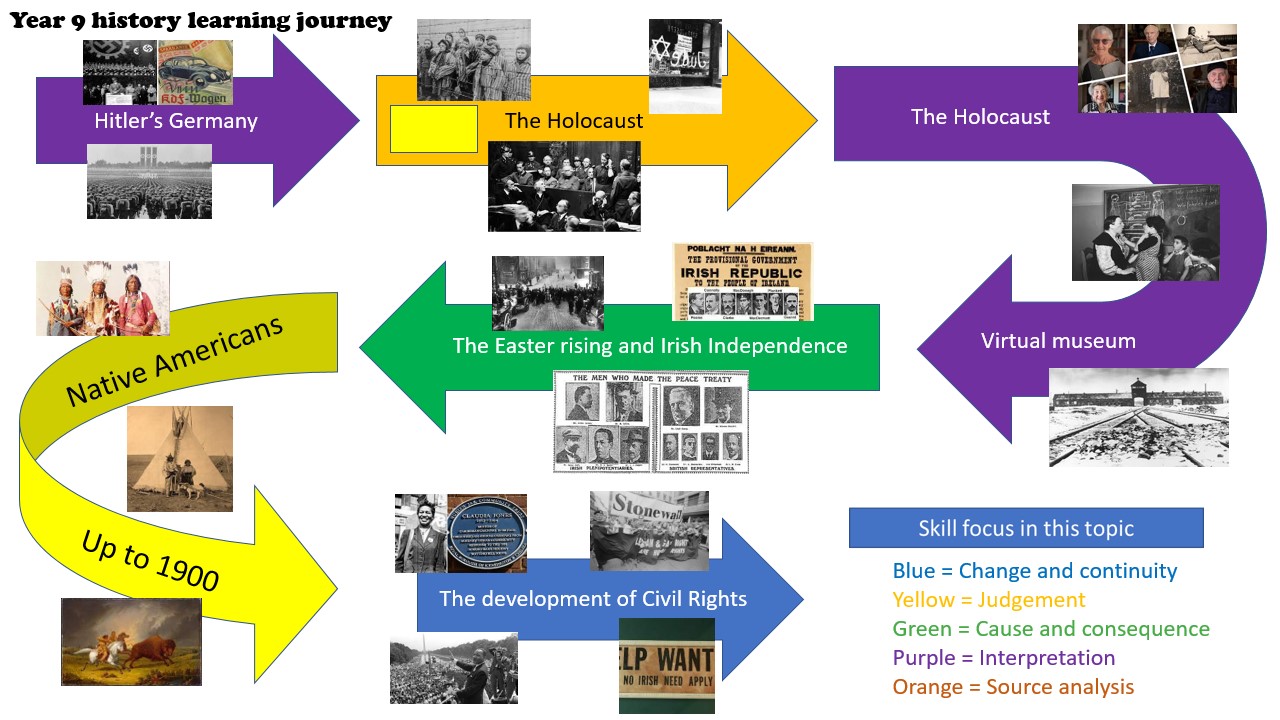
Our Key Stage 3 curriculum follows a broad chronological journey through British and world history. Students encounter a diverse range of societies, cultures and individuals, enabling them to understand how different people have shaped the modern world.
Throughout Years 7-9, students develop an increasingly sophisticated understanding of key historical concepts including:
- Cause and consequence
- Change and continuity
- Significance
- Similarity and difference
- Historical interpretations
- Source analysis and evaluation
Students investigate major turning points in history while studying a range of fascinating enquiries. They learn about kings and queens, revolutionaries and reformers, ordinary people and extraordinary events. Along the way, they discover how historians construct knowledge and why different interpretations of the past continue to exist.
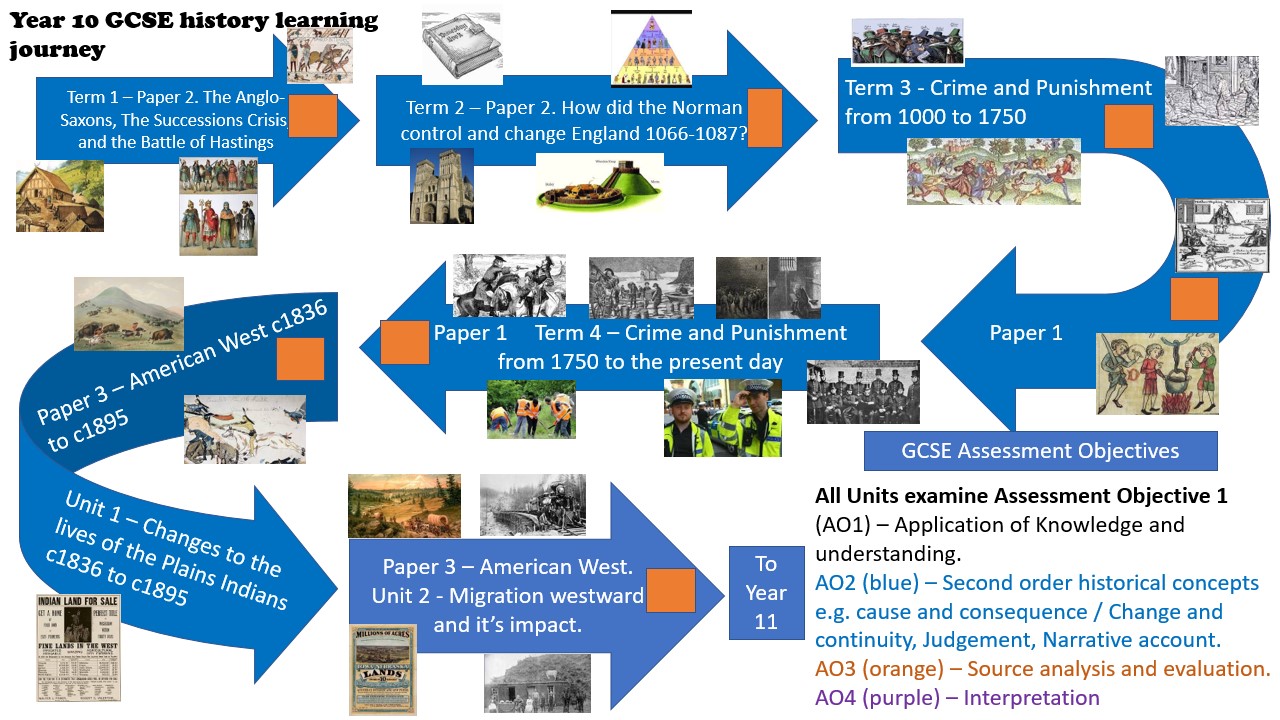
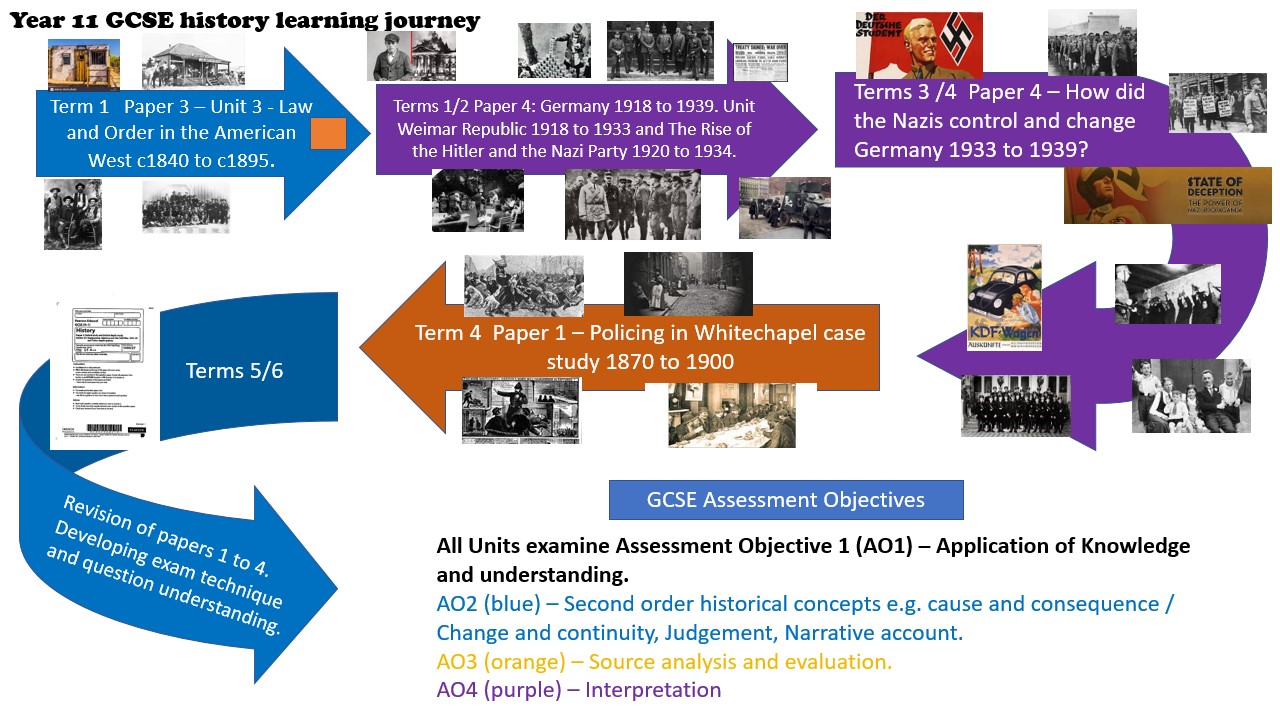
Students who choose History at GCSE study the AQA History qualification. The course explores over one thousand years of British and international history through four engaging units:
Germany, 1890-1945: Democracy and Dictatorship
Students examine Germany's transformation from empire to democracy and ultimately dictatorship. They investigate the rise of Adolf Hitler, the Nazi regime and the experiences of ordinary Germans during one of the most significant periods in modern history.
Conflict and Tension, 1918-1939
Students explore the causes of international conflict between the First and Second World Wars. They consider why peace failed, how dictators challenged the post-war settlement and why Europe descended into war once again.
Health and the People, c.1000-Present Day
This thematic study examines the development of medicine and public health over one thousand years. Students investigate how individuals, governments, religion, science and technology have influenced medical progress and transformed people's quality of life.
Norman England, c.1066-1100
Students study one of the most important events in English history: the Norman Conquest. They explore how William the Conqueror secured control of England and examine the lasting impact of Norman rule on medieval society.
Our students are encouraged to think critically, debate respectfully and engage with challenging questions that have no simple answers. They explore questions such as:
- Why do some individuals change the course of history while others are forgotten?
- How should societies remember difficult aspects of their past?
- Why have regimes succeeded or failed?
- How can ordinary people create meaningful change?
By grappling with these questions, students gain a deeper understanding of themselves, their community and the wider world.
By the end of their History education at Passmores, students will have:
- A secure understanding of Britain's place within world history.
- Knowledge of how societies, governments and cultures have changed over time.
- The ability to analyse evidence and evaluate competing arguments.
- Confidence in constructing well-reasoned judgements.
- An appreciation of diversity, citizenship and democratic values.
- A lifelong interest in understanding the world through the lens of the past.
History matters because the decisions of the future will be made by people who understand the lessons of the past.